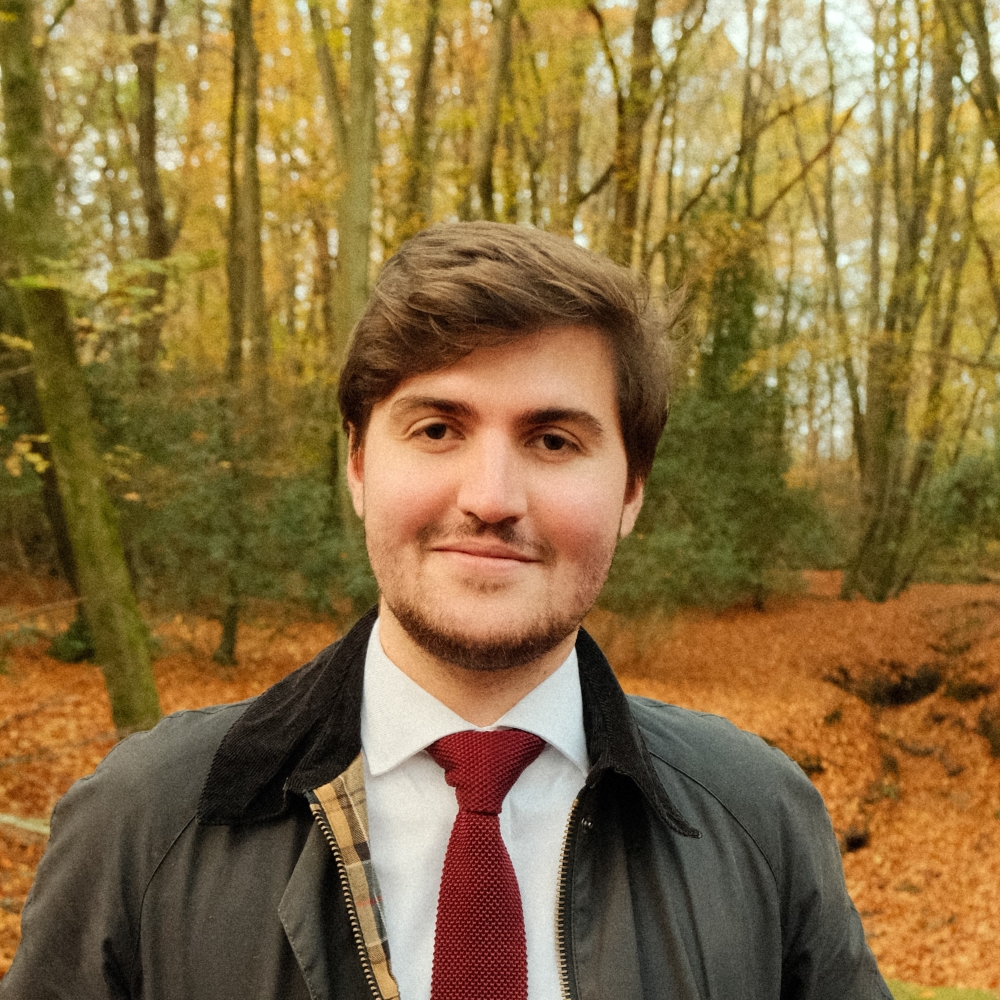
PhD Researcher specialising in safe and responsible AI, with applications for medical image analysis and deep learning for healthcare.
I am a final-year PhD researcher in the School of Computer Science and Mathematics at Keele University, working on safe and responsible AI. My research aim is to ensure AI systems are interpretable, robust, and equitable, developing methods for bias detection and mitigation, systematic robustness evaluation under distribution shift, and interpretable-by-design architectures that enable human oversight and intervention. Applied through medical imaging, where deployment failures carry direct real-world harm, this work produces domain-agnostic frameworks transferable to broader safe and responsible AI challenges.
My thesis, Responsible AI for Healthcare: Robustness, Interpretability, and Fairness in Skin Lesion Recognition, has produced 2 first-author publications including Pattern Analysis and Applications (Springer Nature) and the International Conference on AI in Healthcare 2025 at the University of Cambridge, with a further first-author paper early accepted (top 9%) at MICCAI 2026 and one additional first-author paper under review at Image and Vision Computing (Elsevier). I have developed open-source toolkits, MedXAI (6 explainability methods), SkinCBM (concept bottleneck models), and FairCBM (fairness-aware curriculum learning), enabling reproducible research in explainable and equitable medical AI, accompanied by tutorial notebooks.
Education
PhD in Computer ScienceKeele University · 2023–2026 (Expected)Competition-funded Department Studentship
MSc in Artificial Intelligence & Data ScienceKeele University · 2021–2022 · Distinction
BSc in PhysicsKeele University · 2018–2021 · First Class Honours
Professional Service
Programme Committee: International Conference on AI in Healthcare (AIiH) 2026
Special Session Organiser: Co-organising session on Explainability & Accountability at AIiH 2026
Peer Review: Engineering Applications of Artificial Intelligence; 1st International Workshop on AI Safety and Security (AI-SS) 2026
Teaching: Module Lead — Level 7 Apprenticeship (NHS Partnership), Image Processing (2026–Present); Laboratory Demonstrator (4 years); Guest Lecturer on Deep Learning & Responsible AI
Publications
Publications
Contributing to the fields of AI, computer vision, and medical image processing through peer-reviewed publications and conference presentations.
2026
Fair Curriculum Learning for Concept Bottleneck Models in Dermatology
M.J. Cockayne, M. Ortolani, B. Al-Bander
MICCAI 2026 — Early Accepted (Top 9%)
A four-phase curriculum learning approach for in-training bias mitigation in Concept Bottleneck Models. Orders training by fairness objectives rather than concept difficulty, improving lowest-group F1 by 63% and reducing performance gaps by 44% on SkinCon across 6 Fitzpatrick skin types, with simultaneous 5.3% overall F1 gain.
Sparse Concept Absence Network for Concept Bottleneck Models
M.J. Cockayne, M. Ortolani, B. Al-Bander
Image and Vision Computing, Elsevier — Submitted
A sparse pairwise polynomial classifier (SCAN-CBM) that replaces standard linear heads in Concept Bottleneck Models, capturing concept absence patterns central to diagnostic reasoning. Explicit asymmetric terms model differential patterns, improving binary prediction F1 (0.597 vs 0.566) and concept learning macro F1 (0.759 vs 0.697) over linear baselines.
SubmittedCode to Follow
ClinAuditAI: Agentic AI for Clinical Guideline Adherence Auditing
A. Raza, M.J. Cockayne, M. Ortolani, J. Hill, B. Al-Bander
Proceedings of the International Conference on AI in Healthcare (AIiH 2026): Explainability to Accountability, Springer — Accepted
An agentic AI framework for automated auditing of clinical guideline adherence, combining large language models with structured clinical knowledge to identify deviations from evidence-based practice at scale.
Accepted
2025
DermFormer: Nested Multi-modal Vision Transformers for Robust Skin Cancer Detection
A transformer-based multi-modal architecture achieving state-of-the-art performance (0.779 diagnosis accuracy) while maintaining superior robustness to real-world corruptions. Combines dermoscopic images, clinical images, and patient metadata through entropy-weighted ensemble classification.
Classification-to-Segmentation: Class Activation Mapping for Zero-Shot Skin Lesion Segmentation
M.J. Cockayne, M. Ortolani, B. Al-Bander
Proceedings of the International Conference on AI in Healthcare (AIIH), Springer, 2025 — Oral Presentation
Novel zero-shot approach achieving segmentation without pixel-level annotations by combining Class Activation Maps with MedSAM. Best performance: IoU 0.366 using adaptive CAM selection, demonstrating 98.75% reduction in segmentation failures.
Investigation of bias in cardiovascular disease mortality prediction models with focus on fairness and ethical AI deployment in healthcare settings.
Accepted
2024
Zero-Shot Crack Segmentation for Structural Health Monitoring Using Class Activation Map Guided Segment Anything Model
S. Guo, M.J. Cockayne, M. Ortolani, R. Al-Hamd, B. Al-Bander
Under review at Machine Vision and Applications, 2024
Extension of classification-to-segmentation approach to structural health monitoring, demonstrating zero-shot crack detection in infrastructure without pixel-level annotations.
Four-phase curriculum learning approach for bias mitigation in Concept Bottleneck Models. Orders training by fairness objectives to reduce performance disparities across skin types, improving lowest-group F1 by 63% without constraining overall performance.
Published · Pattern Analysis and Applications, 2025
State-of-the-art multi-modal transformer architecture for robust skin cancer detection achieving 0.779 diagnosis accuracy. Combines dermoscopic images, clinical images, and patient metadata through entropy-weighted ensemble learning with superior robustness to real-world corruptions.
Tutorial repository and inference toolkit for running LLMs and VLMs on the Keele GreenHPC cluster. Covers SLURM job submission, environment setup, prompt formats, and benchmarked results on Llama 3.1 8B, MedGemma 4B, and LLaVA-Med 7B.
Mechanistic interpretability audit of CBMs trained on CUB-200-2011: linear probing at four backbone depths reveals where concepts emerge, how internal geometry reflects semantic structure, and that task-relevant information bypasses the declared concept channel. With direct implications for AI safety auditing.
Educational implementation of Concept Bottleneck Models for interpretable skin cancer diagnosis. Forces reasoning through human-understandable dermatological concepts, enabling clinician validation and correction of model predictions via the 7-point checklist.
Comprehensive PyTorch framework for explainable AI in medical imaging. Provides unified implementations of 6 XAI methods (GradCAM, GradCAM++, Integrated Gradients, RISE, LIME, SHAP) with quantitative evaluation metrics and an interactive Gradio interface.
Sparse pairwise polynomial classifier replacing standard linear heads in Concept Bottleneck Models. Captures concept absence patterns central to diagnostic reasoning through explicit asymmetric interaction terms with hierarchical regularisation.
Novel zero-shot segmentation approach using Class Activation Maps to guide foundation models (SAM/MedSAM). Achieves segmentation without pixel-level annotations, with adaptive CAM selection reducing segmentation failures by 98.75%.
Educational platform for visualising ML model drift in medical imaging. Features 24+ pre-trained models, 15+ realistic drift scenarios, 5 statistical detection methods, and an interactive Streamlit dashboard across 8 MedMNIST datasets.